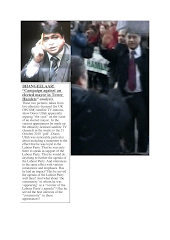
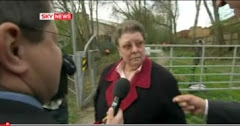
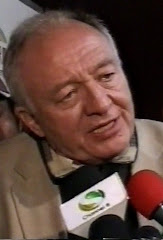
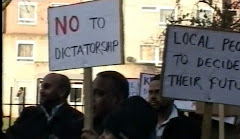
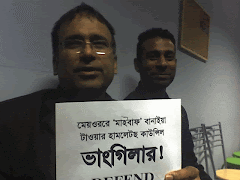
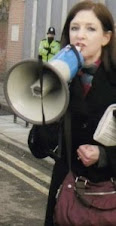
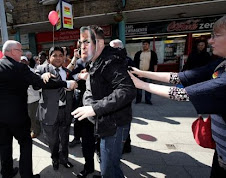
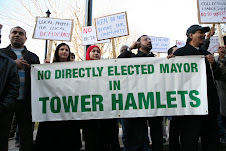
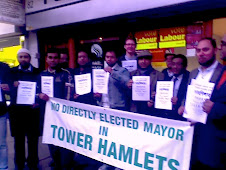
![Kay Jordan marched in Hanbury Street, Princelet street on 17 January 2006 [pictured below]](https://blogger.googleusercontent.com/img/b/R29vZ2xl/AVvXsEjmFpkcZgAW1eZKWId6O-xApvo7_zu4rL0QLz_ByB_FHaKbyUkAFfaPT1RdxXqjX-YVvveRu2zdPyr0pXqiFK-0SAjQd5vyTwGgGDnyU600Gk-gu-MueRhRIg_UhFT66fo8gzCl2tM4BX-8/s760/KHOODEELAAR%2521+No+to+Crossrail+Hole%252C+Demo+in+Hanbury%252C+Spelman%252C+Princelet+Streets+and+Brick+Lane+London+E1+17+January+2006.jpeg)
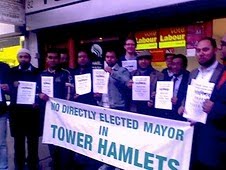
Calling all who might have been present at a stated 'party' where Andrew Gilligan, the Daily Telegraph media group staff, was feted in East London..
This call is based on a claim by Andrew Gilligan himself to the effect [our paraphrases] that a number of his ‘moderate Muslim’ fans held a ‘thank you’ meal for him.
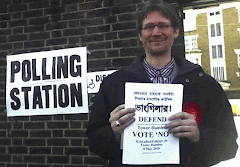
We are making this call to specifically verify information about the "NO to a directly elected mayor" Campaign.
Did anyone present have a conversation with Andrew Gilligan about the subject?
If so, please contact us on the usual numbers and via the usual email address ASAP!
Thank you.
[To be continued]
Thursday, 20 May 2010

Sunday, 9 May 2010
CONTEXTUAL material: Allegations about voter fraud & the 'watchdog' chief. Details on complaints about Tower Hamlets Referendum will be out on Monday
How £100k 'Modern Militant' presided over voting shambles
By IAN GALLAGHER
Last updated at 2:18 PM on 9th May 2010
Comments (71)
Add to My Stories
Now observers from Kenya say British system is a 'recipe for corruption'
Tories missed out on majority by just 16,000 votes
Woman in charge of Electoral Commission is long-term agitator for electoral 'reform'
She once described House of Lords as a 'relic and active hindrance'
She lives with Left-wing former leader of Hackney Council
She's paid £100,000 a year for a three-day-week - a job set up by Tony Blair
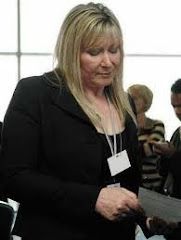
Modern militant: Jenny Watson has had a long career in quangos
The woman who presided over Britain’s ‘Third World’ voting chaos is a former Left-wing campaigner dubbed ‘The Modern Militant’ who now earns £100,000 for a three-day week as head of the election quango.
Jenny Watson has been a long-term agitator for voting reform and was once active in a pressure group seeking major constitutional change.
She again called for modernisation of the system following the shambles of Thursday’s poll – even though as chairman of the Electoral Commission, a quango set up by Tony Blair, it was her job to ensure the vote could run smoothly.
As thousands of people were locked out of the polls, 46-year-old Ms Watson went on TV to blame everyone but herself for the fiasco.
She criticised returning officers and described the inadequacies of the system as ‘a legacy of the Victorian era’.
She said that election law may now need to be changed – a view perhaps unsurprising given her radical past. In the late Nineties she was campaign manager at Charter 88 – the Left-wing pressure group that advocated constitutional and electoral reform.
At the time, Ms Watson said: ‘The House of Lords is a relic, an active
hindrance to a government which the people chose to control the country.’
Since then Ms Watson, a seasoned human rights campaigner, has moved from quango to quango, fronting, among others, the Equal Opportunities Commission, where she earned her ‘Modern Militant’ epithet.
She joined the Electoral Commission last year, an organisation that has now been swamped by calls from angry voters who were unable to exercise their democratic right, and Ms Watson has promised a ‘thorough review’ of what happened.
The chaos means that the results in some seats may yet be challenged in the courts.
Shami Chakrabarti, director of civil rights group Liberty, described the chaos as ‘unworthy of a mature democracy like ours’.
TORIES MISSED MAJORITY BY 16,000 VOTES
David Cameron has been kept out of moving straight into Number 10 by the will of just 16,000 voters.
The Tories’ ability to form a majority government was thwarted by just 0.06 per cent of the voting public.
The way Britain was plunged into the uncertain scenario of a hung parliament was uncovered by researchers at Plymouth University who pointed to the Tories missing out in just 19 target constituencies.
Colin Rallings and Michael Thrasher said Mr Cameron came tantalisingly close to forming a government.
The directors at the university’s elections’ centre wrote: ‘Cameron came so near and yet so far.
‘Just 16,000 extra votes for the Tories, distributed in the 19 constituencies in which the party came closest to winning, would have spared us a weekend of negotiation and speculation.’
She added: ‘This scandal must not be lost in all the current speculation about a new government, and the relevant authorities cannot be left to investigate themselves.
To add to the shame, even official election monitors from Kenya and war-torn Sierra Leone were so shocked by what they saw on polling day that they described the British system as a 'recipe for corruption'.
They said that a lack of proper identity checks at polling stations and voters being turned away meant that our electoral system was highly vulnerable to corruption.
Marie Marilyn Jalloh, and MP from Sierra Leone, told the Sunday Times: 'There has to be some doubt over the legitimacy of the result.
'Where people have been disenfranchised of cases of fraud are found there should be another vote. In My country this would be very controversial.
'Your system is a recipe for corruption; it was a massive shock when I saw ou didn't need any identification to vote. In Sierra Leone you need an identity card and also neeed to give your fingerprint.
'Here you need nothing. In this respect, our own system is more secure than yours.'
Anyone who feels they were denied their fundamental right to vote should contact us urgently. Liberty will use all legal and campaigning means to ensure that this disgrace is never repeated.’
Polling stations in London, Sheffield, Manchester, Birmingham, Liverpool, Newcastle and Leeds were caught out by a late turnout of voters.
Some turned people away when polls closed at 10pm, while others allowed lock-ins to enable people to vote after the deadline.
In Hackney, London, angry would-be voters staged a sit-in when polls closed. In his Sheffield Hallam constituency, Liberal Democrat leader Nick Clegg went to offer his apologies to frustrated voters at a polling station after they queued for more than three hours.
Doors were closed on 200 potential voters in Ladybarn in Manchester, while in Liverpool, voters were left waiting when one polling station ran out of ballot papers.
Geoffrey Robertson QC has said that people denied the right to vote could sue for compensation and get 'at least £750'
Responsibility for the organisation of elections rests with returning officers, who are council chief executives. Those in charge of areas that saw the worst chaos are all on six-figure salaries.
John Mothersole, the £181,000 boss of Sheffield City Council, apologised to hundreds of voters who queued for hours in vain.
Birmingham’s chief executive Stephen Hughes, who is paid £200,000 a year, was similarly penitent and promised an investigation.
Other returning officers on the list of shame include Manchester’s Sir Howard Bernstein (£199,056), Liverpool’s Colin Hilton (£227,500) and Hackney’s Tim Shields (£112, 956).
A spokesman for Solace – the Society of Local Authority Chief Executives – admitted that mistakes were made but said Ms Watson’s criticism had been unhelpful.
David Monks, chief executive of Huntingdonshire District Council, said a late surge in voters was one factor, but argued that extra staffing at polling stations would not have helped because each station had just one register, with one person ticking off names.
More...
A diatribe laced with threats: Brown vents rage in furious call to Clegg as Lib Dem leader holds cloak-and-dagger meeting with Cameron
Anger of student voters put into the 'slow queue'
Forget deals, just go it alone, says ex Tory chairman Tebbit
Gordon Brown loses solo role in Cenotaph ceremony 'demotion'
MAIL ON SUNDAY COMMENT: Brown has lost. So has Clegg. We need a new government. By tonight
LIZ JONES: Retirement is overrated - just ask the tireless (and dishy) Mr Dimbleby
JAMES FORSYTH: They were sure they had it in the bag - even after the exit poll came in
TIM MONTGOMERIE: Remember who deserves the last dance, Dave
He said part of the blame was due to a high number of new returning officers with little or no experience in running elections. ‘It is not something you can learn from a book,’ he added.
Of the row sparked by Ms Watson’s comments, he said: ‘I am not interested in trading blows with the Electoral Commission. There’s no need to kick people when they are down; that is not right.’
Voters queue round the block in Newcastle at 9.45
Ms Watson was appointed to her job in January last year by the Speakers’ Committee of senior MPs. She has also worked for Victim Support and was chairman of the ‘gender equality’ group, The Fawcett Society.
Asked why there had been so many voting problems, she said: ‘This is a significant concern.
They [the returning officers] will have to answer to us and they will have to answer to the local voters. They should have put extra staff on and got extra ballot papers if they were running out.
‘It’s largely a legacy of the Victorian era. It’s not sensible to have a system that was designed when five million people were eligible to vote.’
However, her excuse was met with widespread derision, with many pointing out that the system had coped perfectly well in the past, and with a higher turnout.
Human rights lawyer Geoffrey Robertson QC has said that people denied the right to vote could sue for compensation, and could get ‘at least £750’.
The Election was monitored by a group of observers from countries including Rwanda, Bangladesh, Sierra Leone and Nigeria.
Among the delegates was Lisa Hanna, a Jamaican MP and former Miss World, who said she was shocked by the voting fiasco.
She told The Mail on Sunday: ‘It’s unfortunate when someone is standing in a line for their own democracy and are turned away.’
Why election officials are a law unto themselves
By Heather Brooke
Anyone trying to find out what preparations were made for Thursday’s General Election would have encountered a wall of silence from the public officials in charge.
I know because I made these enquiries last year. I wanted to know how local councils were registering people to vote and whether the number was going up or down and why.
I wanted to know if there was any truth to a Data Sharing Review instigated by the Cabinet Office that stated voter registration was down due to worries that marketing companies would get voters’ names from the electoral role and send junk mail.
The review recommended scrapping the publicly available electoral roll so only state officials and some private companies could access it. The Government took up this recommendation and there is a consultation in place to abolish it.
Nick Clegg and his wife Miriam Gonzalez Durantez arrive at the Bents Green Methodist Church in Sheffield to cast their votes in the UK general election
This is of great concern. In a democracy it is essential that people can see who is registered to vote and where.
Why? Well for a start, officials rarely expose voter fraud, it is normally ordinary people or the Press – it was a reporter who found there was only one occupant at a Tower Hamlets address where eight Bengalis were registered to vote.
From my queries to local councils I discovered the recommendation to abolish the roll was based on fiction. Voter registration was not going down. This was made clear by the turnout at Thursday’s Election, up from 61.4 per cent in 2005 to 65.2 per cent.
But I discovered something more disturbing. The officials charged with compiling electoral registers and running elections were accountable to no one.
Local councils do not publish information about electoral preparations so it was only
by making Freedom of Information requests that I could get answers. I made requests to every council in the UK.
I received from them all a version of this response from the London Borough of Barnet: ‘The Electoral Registration Officers are not answerable to the Council in respect of their electoral responsibilities and duties, which are carried out in their own personal capacity.
An example of this is that the Register of Electors is deemed to be the property of the Electoral Registration Officer, not the local authority.’
David Cameron leaves a poling station with his wife Samantha after casting their votes in Witney, Oxfordshire
The councils also claimed any information held by the election officials relating to their duties was exempt from disclosure. This is clearly not acceptable. We should demand accountability from Electoral Registration Officers and Returning Officers.
Let’s look at the Electoral Commission, the so-called elections watchdog. Its chairwoman, Jenny Watson, says all the Commission can do is provide guidance to election officers; managing the elections is the responsibility of local election officers.
Guess who is responsible for monitoring the performance of these electoral officials? The Commission’s website states: ‘Electoral Registration Officers and Returning Officers are asked to assess themselves against the standards.’
There are supposedly sanctions against abuse. The law states that if an Electoral Registration Officer is found guilty of any act in breach of their official duty, they will be liable to a maximum fine of £5,000. But little if any monitoring is being done.
If the Electoral Commission is getting public money to ensure a competent election system it should have real powers to enforce standards.
If not, we have to ask what value for money are we getting from this toothless watchdog?
What we need is for election officers to come out of the shadows and be directly answerable to the people.
* Heather Brooke is author of The Silent State: Secrecy, Surveillance And The Myth Of British Democracy
Read more: http://www.dailymail.co.uk/news/election/article-1275445/Election-2010-Is-wonder-vote-shambles.html#ixzz0nTmw32ej
By IAN GALLAGHER
Last updated at 2:18 PM on 9th May 2010
Comments (71)
Add to My Stories
Now observers from Kenya say British system is a 'recipe for corruption'
Tories missed out on majority by just 16,000 votes
Woman in charge of Electoral Commission is long-term agitator for electoral 'reform'
She once described House of Lords as a 'relic and active hindrance'
She lives with Left-wing former leader of Hackney Council
She's paid £100,000 a year for a three-day-week - a job set up by Tony Blair
Modern militant: Jenny Watson has had a long career in quangos
The woman who presided over Britain’s ‘Third World’ voting chaos is a former Left-wing campaigner dubbed ‘The Modern Militant’ who now earns £100,000 for a three-day week as head of the election quango.
Jenny Watson has been a long-term agitator for voting reform and was once active in a pressure group seeking major constitutional change.
She again called for modernisation of the system following the shambles of Thursday’s poll – even though as chairman of the Electoral Commission, a quango set up by Tony Blair, it was her job to ensure the vote could run smoothly.
As thousands of people were locked out of the polls, 46-year-old Ms Watson went on TV to blame everyone but herself for the fiasco.
She criticised returning officers and described the inadequacies of the system as ‘a legacy of the Victorian era’.
She said that election law may now need to be changed – a view perhaps unsurprising given her radical past. In the late Nineties she was campaign manager at Charter 88 – the Left-wing pressure group that advocated constitutional and electoral reform.
At the time, Ms Watson said: ‘The House of Lords is a relic, an active
hindrance to a government which the people chose to control the country.’
Since then Ms Watson, a seasoned human rights campaigner, has moved from quango to quango, fronting, among others, the Equal Opportunities Commission, where she earned her ‘Modern Militant’ epithet.
She joined the Electoral Commission last year, an organisation that has now been swamped by calls from angry voters who were unable to exercise their democratic right, and Ms Watson has promised a ‘thorough review’ of what happened.
The chaos means that the results in some seats may yet be challenged in the courts.
Shami Chakrabarti, director of civil rights group Liberty, described the chaos as ‘unworthy of a mature democracy like ours’.
TORIES MISSED MAJORITY BY 16,000 VOTES
David Cameron has been kept out of moving straight into Number 10 by the will of just 16,000 voters.
The Tories’ ability to form a majority government was thwarted by just 0.06 per cent of the voting public.
The way Britain was plunged into the uncertain scenario of a hung parliament was uncovered by researchers at Plymouth University who pointed to the Tories missing out in just 19 target constituencies.
Colin Rallings and Michael Thrasher said Mr Cameron came tantalisingly close to forming a government.
The directors at the university’s elections’ centre wrote: ‘Cameron came so near and yet so far.
‘Just 16,000 extra votes for the Tories, distributed in the 19 constituencies in which the party came closest to winning, would have spared us a weekend of negotiation and speculation.’
She added: ‘This scandal must not be lost in all the current speculation about a new government, and the relevant authorities cannot be left to investigate themselves.
To add to the shame, even official election monitors from Kenya and war-torn Sierra Leone were so shocked by what they saw on polling day that they described the British system as a 'recipe for corruption'.
They said that a lack of proper identity checks at polling stations and voters being turned away meant that our electoral system was highly vulnerable to corruption.
Marie Marilyn Jalloh, and MP from Sierra Leone, told the Sunday Times: 'There has to be some doubt over the legitimacy of the result.
'Where people have been disenfranchised of cases of fraud are found there should be another vote. In My country this would be very controversial.
'Your system is a recipe for corruption; it was a massive shock when I saw ou didn't need any identification to vote. In Sierra Leone you need an identity card and also neeed to give your fingerprint.
'Here you need nothing. In this respect, our own system is more secure than yours.'
Anyone who feels they were denied their fundamental right to vote should contact us urgently. Liberty will use all legal and campaigning means to ensure that this disgrace is never repeated.’
Polling stations in London, Sheffield, Manchester, Birmingham, Liverpool, Newcastle and Leeds were caught out by a late turnout of voters.
Some turned people away when polls closed at 10pm, while others allowed lock-ins to enable people to vote after the deadline.
In Hackney, London, angry would-be voters staged a sit-in when polls closed. In his Sheffield Hallam constituency, Liberal Democrat leader Nick Clegg went to offer his apologies to frustrated voters at a polling station after they queued for more than three hours.
Doors were closed on 200 potential voters in Ladybarn in Manchester, while in Liverpool, voters were left waiting when one polling station ran out of ballot papers.
Geoffrey Robertson QC has said that people denied the right to vote could sue for compensation and get 'at least £750'
Responsibility for the organisation of elections rests with returning officers, who are council chief executives. Those in charge of areas that saw the worst chaos are all on six-figure salaries.
John Mothersole, the £181,000 boss of Sheffield City Council, apologised to hundreds of voters who queued for hours in vain.
Birmingham’s chief executive Stephen Hughes, who is paid £200,000 a year, was similarly penitent and promised an investigation.
Other returning officers on the list of shame include Manchester’s Sir Howard Bernstein (£199,056), Liverpool’s Colin Hilton (£227,500) and Hackney’s Tim Shields (£112, 956).
A spokesman for Solace – the Society of Local Authority Chief Executives – admitted that mistakes were made but said Ms Watson’s criticism had been unhelpful.
David Monks, chief executive of Huntingdonshire District Council, said a late surge in voters was one factor, but argued that extra staffing at polling stations would not have helped because each station had just one register, with one person ticking off names.
More...
A diatribe laced with threats: Brown vents rage in furious call to Clegg as Lib Dem leader holds cloak-and-dagger meeting with Cameron
Anger of student voters put into the 'slow queue'
Forget deals, just go it alone, says ex Tory chairman Tebbit
Gordon Brown loses solo role in Cenotaph ceremony 'demotion'
MAIL ON SUNDAY COMMENT: Brown has lost. So has Clegg. We need a new government. By tonight
LIZ JONES: Retirement is overrated - just ask the tireless (and dishy) Mr Dimbleby
JAMES FORSYTH: They were sure they had it in the bag - even after the exit poll came in
TIM MONTGOMERIE: Remember who deserves the last dance, Dave
He said part of the blame was due to a high number of new returning officers with little or no experience in running elections. ‘It is not something you can learn from a book,’ he added.
Of the row sparked by Ms Watson’s comments, he said: ‘I am not interested in trading blows with the Electoral Commission. There’s no need to kick people when they are down; that is not right.’
Voters queue round the block in Newcastle at 9.45
Ms Watson was appointed to her job in January last year by the Speakers’ Committee of senior MPs. She has also worked for Victim Support and was chairman of the ‘gender equality’ group, The Fawcett Society.
Asked why there had been so many voting problems, she said: ‘This is a significant concern.
They [the returning officers] will have to answer to us and they will have to answer to the local voters. They should have put extra staff on and got extra ballot papers if they were running out.
‘It’s largely a legacy of the Victorian era. It’s not sensible to have a system that was designed when five million people were eligible to vote.’
However, her excuse was met with widespread derision, with many pointing out that the system had coped perfectly well in the past, and with a higher turnout.
Human rights lawyer Geoffrey Robertson QC has said that people denied the right to vote could sue for compensation, and could get ‘at least £750’.
The Election was monitored by a group of observers from countries including Rwanda, Bangladesh, Sierra Leone and Nigeria.
Among the delegates was Lisa Hanna, a Jamaican MP and former Miss World, who said she was shocked by the voting fiasco.
She told The Mail on Sunday: ‘It’s unfortunate when someone is standing in a line for their own democracy and are turned away.’
Why election officials are a law unto themselves
By Heather Brooke
Anyone trying to find out what preparations were made for Thursday’s General Election would have encountered a wall of silence from the public officials in charge.
I know because I made these enquiries last year. I wanted to know how local councils were registering people to vote and whether the number was going up or down and why.
I wanted to know if there was any truth to a Data Sharing Review instigated by the Cabinet Office that stated voter registration was down due to worries that marketing companies would get voters’ names from the electoral role and send junk mail.
The review recommended scrapping the publicly available electoral roll so only state officials and some private companies could access it. The Government took up this recommendation and there is a consultation in place to abolish it.
Nick Clegg and his wife Miriam Gonzalez Durantez arrive at the Bents Green Methodist Church in Sheffield to cast their votes in the UK general election
This is of great concern. In a democracy it is essential that people can see who is registered to vote and where.
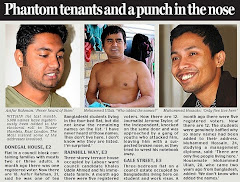
Why? Well for a start, officials rarely expose voter fraud, it is normally ordinary people or the Press – it was a reporter who found there was only one occupant at a Tower Hamlets address where eight Bengalis were registered to vote.
From my queries to local councils I discovered the recommendation to abolish the roll was based on fiction. Voter registration was not going down. This was made clear by the turnout at Thursday’s Election, up from 61.4 per cent in 2005 to 65.2 per cent.
But I discovered something more disturbing. The officials charged with compiling electoral registers and running elections were accountable to no one.
Local councils do not publish information about electoral preparations so it was only
by making Freedom of Information requests that I could get answers. I made requests to every council in the UK.
I received from them all a version of this response from the London Borough of Barnet: ‘The Electoral Registration Officers are not answerable to the Council in respect of their electoral responsibilities and duties, which are carried out in their own personal capacity.
An example of this is that the Register of Electors is deemed to be the property of the Electoral Registration Officer, not the local authority.’
David Cameron leaves a poling station with his wife Samantha after casting their votes in Witney, Oxfordshire
The councils also claimed any information held by the election officials relating to their duties was exempt from disclosure. This is clearly not acceptable. We should demand accountability from Electoral Registration Officers and Returning Officers.
Let’s look at the Electoral Commission, the so-called elections watchdog. Its chairwoman, Jenny Watson, says all the Commission can do is provide guidance to election officers; managing the elections is the responsibility of local election officers.
Guess who is responsible for monitoring the performance of these electoral officials? The Commission’s website states: ‘Electoral Registration Officers and Returning Officers are asked to assess themselves against the standards.’
There are supposedly sanctions against abuse. The law states that if an Electoral Registration Officer is found guilty of any act in breach of their official duty, they will be liable to a maximum fine of £5,000. But little if any monitoring is being done.
If the Electoral Commission is getting public money to ensure a competent election system it should have real powers to enforce standards.
If not, we have to ask what value for money are we getting from this toothless watchdog?
What we need is for election officers to come out of the shadows and be directly answerable to the people.
* Heather Brooke is author of The Silent State: Secrecy, Surveillance And The Myth Of British Democracy
Read more: http://www.dailymail.co.uk/news/election/article-1275445/Election-2010-Is-wonder-vote-shambles.html#ixzz0nTmw32ej
Community investigation into 'referendum' about 'directly elected mayor' in Tower Hamlets: More details during Monday 10 May 2010
2335 Hrs GMT
London
Sunday
09 May 2010
Editor © Muhammad Haque
Community investigation into 'referendum' about 'directly elected mayor' in Tower Hamlets: More details during Monday 10 May 2010
[To be continued]
London
Sunday
09 May 2010
Editor © Muhammad Haque
Community investigation into 'referendum' about 'directly elected mayor' in Tower Hamlets: More details during Monday 10 May 2010
[To be continued]
Saturday, 8 May 2010
UPDATING on the biased role of 'East London Advertiser'. Complaint by the “NO’ campaign to Press Complaints Commission on Monday
2050 Hrs GMT London Saturday 08 May 2010.
Editor © Muhammad Haque.
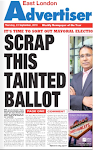
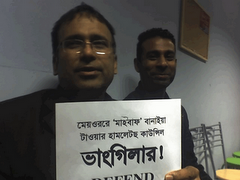
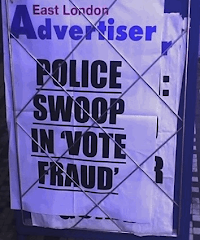
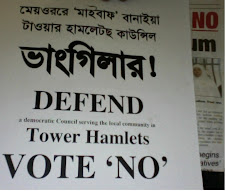
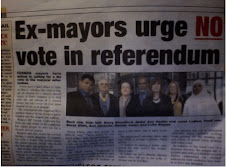
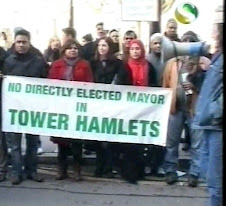
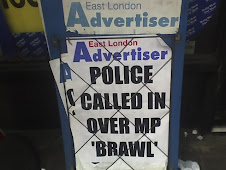
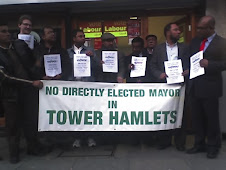
The 'local' 'East London Advertiser' [ELA] [based in the inner city East London borough of Tower Hamlets, UK] failed to carry accurate and timely news about the campaign for a 'no' vote at the 6 May 2010 local referendum held about the future constitution of Tower Hamlets, London council. The ELA casually and tokenistically carried an item including the group picture of ex-mayors, shown to be opposing the change of the council into one where an elected mayor had the key powers. The BHANGEELAAR! Campaign is about to lodge complaints against the ela and other locally circulating 'media' over their bias for one side of the argument. The Bhangeelaar! Campaign is also lodging complaints against a satellite TV station that is supposedly aimed at the UK Bangladeshi community. Updates on those complaints and other actions by the Bhangeelaar! Campaign will be posted here in due course. AADHIKARonline publishes the following blog carrying late breaking stories on the campaign for a democratic Tower Hamlets Council:
http://notoundemocraticmayorintowerhamlets.blogspot.com
Editor © Muhammad Haque.
The 'local' 'East London Advertiser' [ELA] [based in the inner city East London borough of Tower Hamlets, UK] failed to carry accurate and timely news about the campaign for a 'no' vote at the 6 May 2010 local referendum held about the future constitution of Tower Hamlets, London council. The ELA casually and tokenistically carried an item including the group picture of ex-mayors, shown to be opposing the change of the council into one where an elected mayor had the key powers. The BHANGEELAAR! Campaign is about to lodge complaints against the ela and other locally circulating 'media' over their bias for one side of the argument. The Bhangeelaar! Campaign is also lodging complaints against a satellite TV station that is supposedly aimed at the UK Bangladeshi community. Updates on those complaints and other actions by the Bhangeelaar! Campaign will be posted here in due course. AADHIKARonline publishes the following blog carrying late breaking stories on the campaign for a democratic Tower Hamlets Council:
http://notoundemocraticmayorintowerhamlets.blogspot.com
Friday, 7 May 2010
What is the 'secret' behind the disparity between the Council ward elections results and the 'result' of the referendum?
What is the 'secret' behind the disparity between the Council ward elections results and the 'result' of the referendum?
[To be continued]
[To be continued]
Reminder to all 'NO' Vote campaigners of the need to send the evidence of wrongdoing on the referendum about a directly elected mayor in the borough
2315 Hrs GMT
London
Friday
07 May 2010
Editor √ Muhammad Haque
Reminder to all 'NO' Vote campaigners of the need to send the evidence of wrongdoing on the referendum about a directly elected mayor in the borough
[To be continued]
London
Friday
07 May 2010
Editor √ Muhammad Haque
Reminder to all 'NO' Vote campaigners of the need to send the evidence of wrongdoing on the referendum about a directly elected mayor in the borough
[To be continued]
Fight goes on for democratic, accountable diverse and dignified democracy at local and UK levels: Say "NO" to sleaze, corruption, lies and fraud
From the DAILY MAIL, London web site:
Treacherous Lib Dems and Cameron's massive risk
By PETER OBORNE
Last updated at 9:32 PM on 7th May 2010
Comments (0)
Add to My Stories
For days after the General Election of February 1974 the Tory Prime Minister Edward Heath clung on in Downing Street. He could not bear the idea of losing office.
Even though he had secured fewer seats than Harold Wilson, his Labour opponent, Heath hoped that a pact with the Liberal leader Jeremy Thorpe, later to be acquitted of conspiracy to murder his homosexual lover Norman Scott, would provide the solution to his problems.
Heath offered Thorpe the post of Home Secretary.
But after a weekend of supposedly secret and increasingly farcical negotiations, all talks broke down. With deep reluctance and total lack of grace, Heath was obliged to leave Downing Street.
Parallels: Gordon Brown is hanging on to the keys of No 10 - just like Edward Heath did in 1974
The abortive Lib/Tory pact was the prelude to the most disastrous and shameful period of British post-war history.
The stock markets crashed, and so did industrial production. There were violent riots in the streets and many public services broke down. Inflation soared out of control and the savings of many honest and hard-working people were destroyed.
There was talk of socialist revolution, while senior Army officers, intelligence officers and industrialists held secret talks to discuss the possibility of a military coup.
A second election, held in October 1974, did nothing to resolve the situation because it left the balance of political parties in the House of Commons unchanged.
In due course, the International Monetary Fund was called in to help Britain resolve her chronic problems. Not until Margaret Thatcher achieved an outright majority in 1979 was Britain able to secure effective political leadership.
This weekend, history is eerily repeating itself. Once again we have the spectacle of a Prime Minister refusing to accept electoral defeat.
Like Edward Heath, Gordon Brown is making the classic mistake of confusing his personal ambition with the national interest.
More from Peter Oborne...
PETER OBORNE: My bet: The Tories will win, but not by enough. So is this what we're heading back to?30/04/10
PETER OBORNE: Civil war and the rank treachery of the Prince of Darkness23/04/10
PETER OBORNE: Dirty tricks of the REAL nasty party22/04/10
PETER OBORNE: Could this be a seismic moment in British politics? 17/04/10
PETER OBORNE: Forget the election. The real war is between New and Old Labour10/04/10
The real hero of the expenses scandal: POLITICS: THE SILENT STATE BY HEATHER BROOKE07/04/10
PETER OBORNE: Why this election must be a choice between honesty and dishonesty02/04/10
PETER OBORNE: Armed with guns and machetes, they were chanting Kill! Kill! Kill! 02/04/10
VIEW FULL ARCHIVE
Like Heath, Brown is trying to stay in Downing Street by striking a deal with the Liberal Democrats. And, as in 1974, political crisis has struck at a time of economic calamity.
The stockmarkets have fallen 10 per cent in the past week, while sterling is in freefall on the international currency exchanges. As in 1974 Britain faces a financial catastrophe.
It is impossible to overstate what a disaster the result of last Thursday's General Election has been for Britain. It means that alongside an economic crisis, we face political paralysis. One might call the situation a 'perfect storm'.
A second General Election is certain to be called within months, but, as in 1974, there is no guarantee that it will be bring clarity to what is in danger of becoming a desperate situation.
But there is also a more urgent short-term problem. Though Gordon Brown remains Prime Minister technically, and continues to occupy Downing Street, he has lost all authority.
If this political chaos is unresolved on Monday, the markets will turn inexorably on Britain, just as they have turned on Greece over the past few weeks.
So Britain has just two days to cobble together a short-term solution to our problems - or face financial meltdown. And yet Gordon Brown, like Edward Heath 36 years ago, is in no real position to provide the answer. He is profoundly unpopular and has been rejected by the electorate.
So this weekend the momentum lies with David Cameron.
It is true that he did not win an outright majority. Nevertheless, he has led the Conservative Party to one of the most famous triumphs in its history, adding well over 100 seats to the Tory representation in the Commons, a feat not achieved by any Tory leader for 80 years.
Opportunity: Liberal Democrat leader Nick Clegg is being wooed by both sides
Furthermore, it is worth bearing in mind that he scored a clear advantage of two million votes over Labour, scoring 36per cent of the popular vote against Gordon Brown's 29 per cent.
Had that situation been reversed, such is the gross unfairness of the British electoral system, Labour would today be boasting of an electoral triumph and a near three-figure parliamentary advantage over the Tories.
That is why this weekend everything rests on David Cameron, the 43-year-old Tory leader. Cameron is utterly unproven in high office, and has never even held a ministerial job.
Yet today he has been thrust into the heart of an economic and political crisis that will define his own destiny, and the future of Britain.
On top of that he is making vital decisions on the run, and with out the benefit of more than a few hours of snatched sleep. The first of his dilemmas was the biggest: should he offer to work with the Liberal Democrats.
It had always been Cameron's intention to avoid political entanglements. He had decided, in the event of a hung parliament, that the Conservatives would govern on their own.
If the Liberal Democrats chose to sabotage the Tories they would have to take the blame for bringing down this government, and the inevitable political instability that would follow.
But late on Thursday night, when the likelihood of a hung parliament became clearer, Cameron called a crisis meeting with his closest advisers.
They met again in Conservative headquarters early on Friday morning and the strategy became clear. It was essential to offer a deal to Nick Clegg. It would be disastrous for the national interest to act in any other way.
The rudiments of this deal were spelt out in a Press conference early yesterday afternoon. Cameron is offering much more than Nick Clegg can ever have expected: the possibility of Cabinet jobs, the prospect of electoral reform, and major concessions in key policy areas.
This strategy has massive risks. As Cameron is well aware he could spark a revolt inside the Conservative Party, many of whose most senior and influential-figures believe that the party could face electoral oblivion if proportional representation is introduced.
Opportunity: David Cameron spelled out his offer to Nick Clegg at a pres office yesterday afternoon. He is offering the possibility of Cabinet jobs, the prospect of electoral reform, and major concessions in key policy areas
Almost certainly he can deal with potential rebels in his own party. Much more dangerous is treachery from the Liberal Democrats themselves. The majority of the party is profoundly hostile to a Tory government.
The Lib Dems will play a waiting game. They will try to avoid responsibility for David Cameron's most unpopular decisions, and plot secretly with Labour for the most convenient tactical moment to bring down the Tories and precipitate an election that can be fought on their terms.
The most dangerous moment will most likely come this autumn, by which time the Labour Party will have found time to regroup and elect a new leader who can work more easily with the Liberal Democrats than Gordon Brown.
For his part, yesterday David Cameron acted honourably and sensibly. He acted as a national leader and future Prime Minister rather than a partisan figure driven by factional advantage.
He made the Liberal Democrats a generous offer - and Nick Clegg will damage himself gravely if he refuses it.
My bet is that David Cameron will find himself in Downing Street by Monday morning. He has already shown that he has the moral stature to be British Prime Minister. This is his moment of destiny.
Print this article Read later Email to a friend
Share this article:
Facebook
TwitterDigg itRedditFarkDel.icio.usNewsvineNowpublicStumbleUponMySpace
Add your comments Comments (0)
No comments have so far been submitted. Why not be the first to send us your thoughts, or debate this issue live on our message boards.
Add your comment
Name:
Town & Country:
Your name and location will appear next to your comment.
You have 1000 characters left.
We welcome your opinions. This is a public forum. Libellous and abusive comments are not allowed. Please read our House Rules.
I agree to the House Rules
Remember me - this will save you having to type out your name and location when you next leave a comment.
For information about privacy and cookies please read our Privacy Policy.
Terms Clear Submit Content
Read more: http://www.dailymail.co.uk/debate/election/article-1274938/UK-ELECTION-RESULTS-2010-Treacherous-Lib-Dems-Camerons-massive-risk.html#ixzz0nHXq3yrd
Treacherous Lib Dems and Cameron's massive risk
By PETER OBORNE
Last updated at 9:32 PM on 7th May 2010
Comments (0)
Add to My Stories
For days after the General Election of February 1974 the Tory Prime Minister Edward Heath clung on in Downing Street. He could not bear the idea of losing office.
Even though he had secured fewer seats than Harold Wilson, his Labour opponent, Heath hoped that a pact with the Liberal leader Jeremy Thorpe, later to be acquitted of conspiracy to murder his homosexual lover Norman Scott, would provide the solution to his problems.
Heath offered Thorpe the post of Home Secretary.
But after a weekend of supposedly secret and increasingly farcical negotiations, all talks broke down. With deep reluctance and total lack of grace, Heath was obliged to leave Downing Street.
Parallels: Gordon Brown is hanging on to the keys of No 10 - just like Edward Heath did in 1974
The abortive Lib/Tory pact was the prelude to the most disastrous and shameful period of British post-war history.
The stock markets crashed, and so did industrial production. There were violent riots in the streets and many public services broke down. Inflation soared out of control and the savings of many honest and hard-working people were destroyed.
There was talk of socialist revolution, while senior Army officers, intelligence officers and industrialists held secret talks to discuss the possibility of a military coup.
A second election, held in October 1974, did nothing to resolve the situation because it left the balance of political parties in the House of Commons unchanged.
In due course, the International Monetary Fund was called in to help Britain resolve her chronic problems. Not until Margaret Thatcher achieved an outright majority in 1979 was Britain able to secure effective political leadership.
This weekend, history is eerily repeating itself. Once again we have the spectacle of a Prime Minister refusing to accept electoral defeat.
Like Edward Heath, Gordon Brown is making the classic mistake of confusing his personal ambition with the national interest.
More from Peter Oborne...
PETER OBORNE: My bet: The Tories will win, but not by enough. So is this what we're heading back to?30/04/10
PETER OBORNE: Civil war and the rank treachery of the Prince of Darkness23/04/10
PETER OBORNE: Dirty tricks of the REAL nasty party22/04/10
PETER OBORNE: Could this be a seismic moment in British politics? 17/04/10
PETER OBORNE: Forget the election. The real war is between New and Old Labour10/04/10
The real hero of the expenses scandal: POLITICS: THE SILENT STATE BY HEATHER BROOKE07/04/10
PETER OBORNE: Why this election must be a choice between honesty and dishonesty02/04/10
PETER OBORNE: Armed with guns and machetes, they were chanting Kill! Kill! Kill! 02/04/10
VIEW FULL ARCHIVE
Like Heath, Brown is trying to stay in Downing Street by striking a deal with the Liberal Democrats. And, as in 1974, political crisis has struck at a time of economic calamity.
The stockmarkets have fallen 10 per cent in the past week, while sterling is in freefall on the international currency exchanges. As in 1974 Britain faces a financial catastrophe.
It is impossible to overstate what a disaster the result of last Thursday's General Election has been for Britain. It means that alongside an economic crisis, we face political paralysis. One might call the situation a 'perfect storm'.
A second General Election is certain to be called within months, but, as in 1974, there is no guarantee that it will be bring clarity to what is in danger of becoming a desperate situation.
But there is also a more urgent short-term problem. Though Gordon Brown remains Prime Minister technically, and continues to occupy Downing Street, he has lost all authority.
If this political chaos is unresolved on Monday, the markets will turn inexorably on Britain, just as they have turned on Greece over the past few weeks.
So Britain has just two days to cobble together a short-term solution to our problems - or face financial meltdown. And yet Gordon Brown, like Edward Heath 36 years ago, is in no real position to provide the answer. He is profoundly unpopular and has been rejected by the electorate.
So this weekend the momentum lies with David Cameron.
It is true that he did not win an outright majority. Nevertheless, he has led the Conservative Party to one of the most famous triumphs in its history, adding well over 100 seats to the Tory representation in the Commons, a feat not achieved by any Tory leader for 80 years.
Opportunity: Liberal Democrat leader Nick Clegg is being wooed by both sides
Furthermore, it is worth bearing in mind that he scored a clear advantage of two million votes over Labour, scoring 36per cent of the popular vote against Gordon Brown's 29 per cent.
Had that situation been reversed, such is the gross unfairness of the British electoral system, Labour would today be boasting of an electoral triumph and a near three-figure parliamentary advantage over the Tories.
That is why this weekend everything rests on David Cameron, the 43-year-old Tory leader. Cameron is utterly unproven in high office, and has never even held a ministerial job.
Yet today he has been thrust into the heart of an economic and political crisis that will define his own destiny, and the future of Britain.
On top of that he is making vital decisions on the run, and with out the benefit of more than a few hours of snatched sleep. The first of his dilemmas was the biggest: should he offer to work with the Liberal Democrats.
It had always been Cameron's intention to avoid political entanglements. He had decided, in the event of a hung parliament, that the Conservatives would govern on their own.
If the Liberal Democrats chose to sabotage the Tories they would have to take the blame for bringing down this government, and the inevitable political instability that would follow.
But late on Thursday night, when the likelihood of a hung parliament became clearer, Cameron called a crisis meeting with his closest advisers.
They met again in Conservative headquarters early on Friday morning and the strategy became clear. It was essential to offer a deal to Nick Clegg. It would be disastrous for the national interest to act in any other way.
The rudiments of this deal were spelt out in a Press conference early yesterday afternoon. Cameron is offering much more than Nick Clegg can ever have expected: the possibility of Cabinet jobs, the prospect of electoral reform, and major concessions in key policy areas.
This strategy has massive risks. As Cameron is well aware he could spark a revolt inside the Conservative Party, many of whose most senior and influential-figures believe that the party could face electoral oblivion if proportional representation is introduced.
Opportunity: David Cameron spelled out his offer to Nick Clegg at a pres office yesterday afternoon. He is offering the possibility of Cabinet jobs, the prospect of electoral reform, and major concessions in key policy areas
Almost certainly he can deal with potential rebels in his own party. Much more dangerous is treachery from the Liberal Democrats themselves. The majority of the party is profoundly hostile to a Tory government.
The Lib Dems will play a waiting game. They will try to avoid responsibility for David Cameron's most unpopular decisions, and plot secretly with Labour for the most convenient tactical moment to bring down the Tories and precipitate an election that can be fought on their terms.
The most dangerous moment will most likely come this autumn, by which time the Labour Party will have found time to regroup and elect a new leader who can work more easily with the Liberal Democrats than Gordon Brown.
For his part, yesterday David Cameron acted honourably and sensibly. He acted as a national leader and future Prime Minister rather than a partisan figure driven by factional advantage.
He made the Liberal Democrats a generous offer - and Nick Clegg will damage himself gravely if he refuses it.
My bet is that David Cameron will find himself in Downing Street by Monday morning. He has already shown that he has the moral stature to be British Prime Minister. This is his moment of destiny.
Print this article Read later Email to a friend
Share this article:
TwitterDigg itRedditFarkDel.icio.usNewsvineNowpublicStumbleUponMySpace
Add your comments Comments (0)
No comments have so far been submitted. Why not be the first to send us your thoughts, or debate this issue live on our message boards.
Add your comment
Name:
Town & Country:
Your name and location will appear next to your comment.
You have 1000 characters left.
We welcome your opinions. This is a public forum. Libellous and abusive comments are not allowed. Please read our House Rules.
I agree to the House Rules
Remember me - this will save you having to type out your name and location when you next leave a comment.
For information about privacy and cookies please read our Privacy Policy.
Terms Clear Submit Content
Read more: http://www.dailymail.co.uk/debate/election/article-1274938/UK-ELECTION-RESULTS-2010-Treacherous-Lib-Dems-Camerons-massive-risk.html#ixzz0nHXq3yrd
Subscribe to:
Posts (Atom)